


Home » Sustainability
At ItalPannelli, sustainability is an integral part of our identity. Every day, we work to reduce the environmental impact of our production processes by focusing on renewable energy, circular economy principles, and responsible innovation.
PHOTOVOLTAIC SYSTEM
Clean Energy and Self-Sufficiency
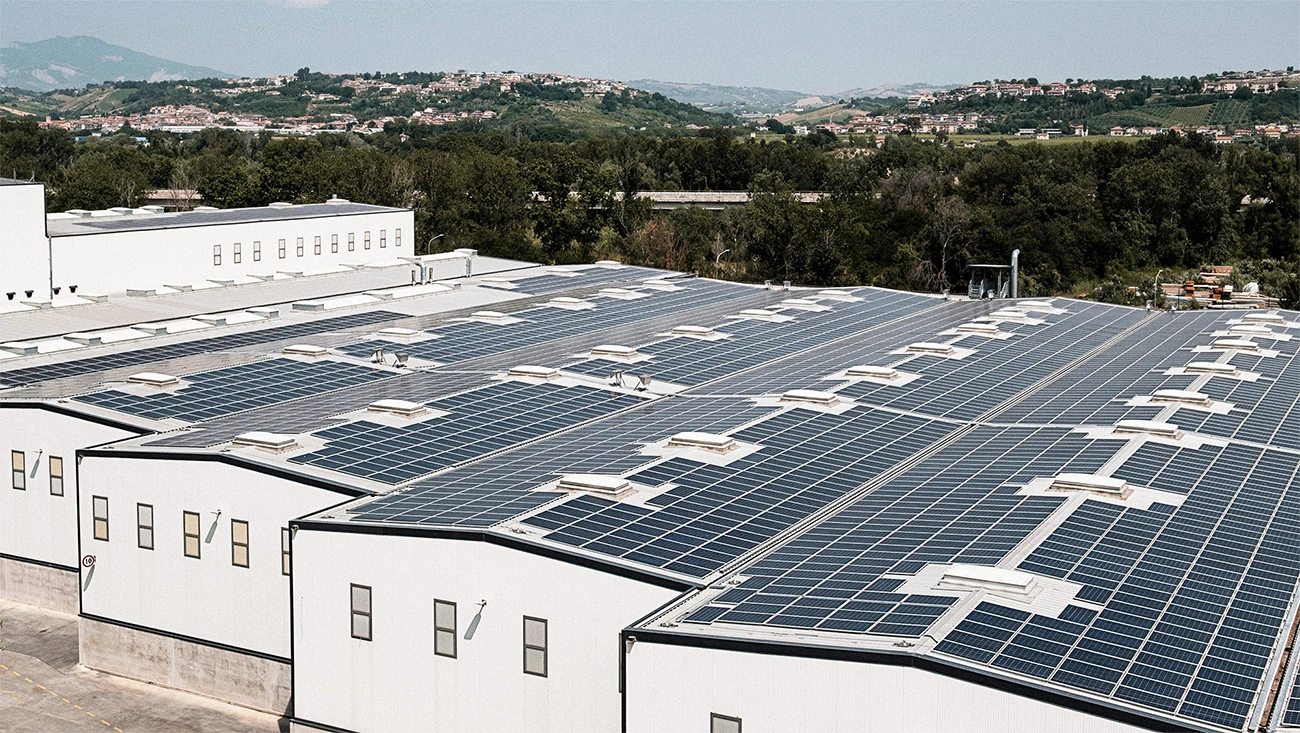
We have installed a 6,7 MW photovoltaic system at our Ancarano (TE) facility, which generates approximately 1,7 GWh of energy per year. Nearly 23% of this energy is self-consumed, directly powering our production lines and offices. This allows us to avoid emitting around 632 tonnes of CO₂ annually – the equivalent of over 21.000 trees or 250 fewer cars on the road.
In parallel, we adopt energy efficiency solutions such as LED lighting and thermal process optimization to further reduce consumption.
GENERATED ENERGY PER YEAR
Our panels are designed to ensure durability, efficiency, and a reduced environmental impact. That’s why we carefully select materials, prioritizing those that are recycled and easily recyclable:
Mineral wool insulation
of internal waste is reused or reintroduced into the production cycle, minimizing waste.
Recycled steel
Electric arc furnace (non-alloyed)
with a minimum recycled content of
Electric arc furnace (alloyed):
with a minimum recycled content of
Integrated cycle steel:
with a minimum recycled content of
Steel is inherently sustainable: it can be recycled indefinitely without losing its mechanical properties. Compared to traditional construction materials such as concrete or brick, steel enables more efficient production processes and lower emissions, especially when produced using electric cycles powered by renewable sources. For this reason, the use of steel aligns with the principles of sustainable architecture promoted by regulations such as EU Regulation 305/2011 (CPR) and the Minimum Environmental Criteria (CAM) for public construction.
Additionally, our panels are fully disassemblable at the end of their life cycle, making it easier to recover and recycle individual components.
But there’s more: sandwich panels are inherently eco-friendly construction solutions. Thanks to their layered structure and high insulating power, they help reduce thermal dispersion in buildings, improve energy efficiency, and lower energy consumption throughout the building’s life cycle. This results in a lower overall environmental impact and a tangible contribution to more sustainable construction.
Toward a Circular Future
Our goal is clear: increase the use of recycled materials, expand production from renewable sources, and continuously improve the efficiency of our processes.